There is a particular kind of heartbreak in discovering that a sacrifice was even greater than you knew. For more than two decades, fishing families, Tribal Nations, and communities across Puget Sound funded restoration efforts, accepted closed fishing seasons, and backed hard conservation measures—all in the belief that more of their salmon would survive the ocean and find their way home for recovery. Newly revised data from the Pacific Salmon Commission tell a harder truth: far more Chinook were killed in distant ocean fisheries than anyone was led to believe.
The corrected estimates by the Pacific Salmon Commission reveal that for over twenty years, ocean fisheries killed thousands more Endangered Species Act–listed Puget Sound Chinook each year than fisheries managers understood. The largest share of that uncounted mortality occurred in British Columbia recreational ocean fisheries, far from the rivers these fish call home. In some of Puget Sound’s most important watersheds—the Nooksack, the Skagit, the Stillaguamish—revised estimates show combined Alaska and British Columbia interception rates topping a staggering 60% of returning adult Chinook before those fish ever reached Puget Sound waters. During the very same years, those rivers repeatedly failed to meet recovery goals, and our Southern Resident orcas kept slipping toward extinction.
This was not a small bookkeeping error. For two decades, managers set recovery targets, drew harvest limits, and measured how much prey was available for starving orcas—all while relying on numbers that hid the true scale of ocean interception. And the corrections, with all their consequences for salmon and the communities who depend on them, were folded into technical processes with little to no public explanation.
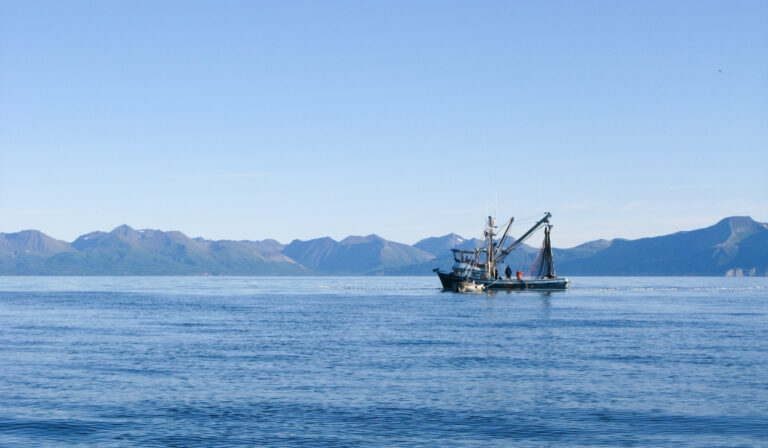
Even before these revisions, the imbalance was stark. Ocean fisheries in British Columbia and Alaska harvest roughly four to six times more Chinook from key Puget Sound watersheds than all local Puget Sound Tribal, commercial, and recreational fisheries combined. The fish are intercepted in distant waters long before they can return to the rivers and communities that have always relied on them. The result is a cruel arithmetic: in 2025, the Stillaguamish Tribe was limited to a ceremonial harvest of just 26 Chinook, while thousands from the same populations were being taken hundreds of miles from home.
It would be easy to treat this as a one-time correction and move on. It is not. These revisions expose a deeper, structural flaw in trying to manage salmon in mixed-stock ocean fisheries—vast open-ocean harvests where fragile, recovering populations are caught indiscriminately alongside healthier ones. No amount of sophisticated monitoring has solved the underlying problem: in the ocean nursery, our most vulnerable salmon cannot be protected from harvest. And the correction raises an uncomfortable question—if a single accounting change can shift the estimates this much, what other uncertainties still hide inside the system?
The stakes are not abstract. More than 25 years after their listing, many Puget Sound Chinook populations remain in crisis. Southern Resident killer whales, listed as endangered in 2005, have declined roughly 20% to just 76 whales today, with the shortage of large Chinook identified as the leading cause of their decline. Research suggests that reducing ocean interceptions before salmon reach orca feeding grounds could boost Chinook abundance in critical whale habitat by as much as 25%.
This reckoning arrives just as the United States and Canada prepare to renegotiate the Pacific Salmon Treaty—the international agreement that governs coastwide harvest and the mixed-stock ocean fisheries now under scrutiny. From California to Alaska, communities are uniting in the first international coastwide movement of its kind, calling for fewer interceptions and for harvest brought closer to the rivers and estuaries where salmon can be managed selectively and sustainably as they return home. With the treaty up for renegotiation before 2028, this is a once-in-a-decade chance to redirect salmon management toward a more sustainable and equitable path, and the work is already underway.
The revised data confirm what coastal communities have observed for years. Real recovery will come from changing where, when, and how salmon are harvested, so that more fish survive the ocean and reach the rivers, communities, and ecosystems that depend on them.
This is not a contest between ocean and river fishers over a shrinking pie. The path forward has to carry everyone with it: transitioning industrial-scale harvest out of the ocean nursery, supporting the ocean fishing families and coastal economies affected by that change, restoring sustainable river-based fisheries, and returning stewardship to the communities closest to the fish. When more salmon survive to return home, there is more to go around—healthier runs, steadier fishing, and more resilient communities from California to Alaska.