

Editor’s Note: This op-ed originally appeared in The Seattle Times on June 18, 2026. It is reprinted here with the author’s permission.
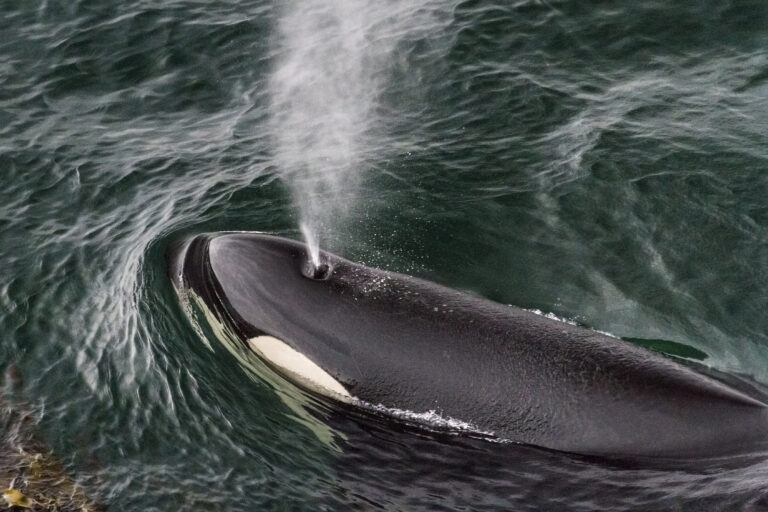
Washington invests substantial public, tribal and community effort to restore its salmon runs, honor tribal treaty fishing rights and protect the salmon food supply for endangered southern resident killer whales. Yet some of those fish are caught far away in Area M, an Alaska mixed-stock fishery on the Alaska Peninsula and eastern Aleutians that intercepts salmon from across the North Pacific.
Alaska’s Department of Law recently voided new Board of Fisheries restrictions on Area M. On paper, that looks like a local Alaska fight. In reality, it is not.
Area M harvests oceangoing Chinook and chum salmon from throughout the North Pacific. Alaska has access because the Alaska Peninsula reaches deep into the North Pacific, where migrating salmon pass through state waters.
Legally, Area M is an Alaska fishery. Biologically, it is a North Pacific fishery.
Area M is heavily regulated. But a thick rule book does little good if it does not protect vulnerable salmon stocks by source of origin.
From 2022 through 2024, the Alaska Department of Fish and Game analyzed nearly 30,000 genetic samples from the South Alaska Peninsula fishery, part of Area M. Of about 837,000 chum harvested annually in that fishery, ADF&G estimated about 69,000 were from a combined British Columbia/Washington reporting group, 103,000 from Coastal Western Alaska, 110,000 from Russia and 147,000 from Japan.
For Washington communities trying to restore salmon runs, B.C. communities tied to transboundary salmon runs, Western Alaska families facing subsistence closures and Japanese communities with declining chum returns, these are fish that never came home.
The Chinook evidence is also troubling. In 2025, ADF&G estimated the South Alaska Peninsula post-June fishery harvested 15,893 Chinook. Because the South Alaska Peninsula has no documented Chinook spawning stocks, all of those fish originated elsewhere. ADF&G classified about 14,500 — over 90% — as “non-Alaska.”
Although ADF&G did not break that group into specific regions, a 2014 analysis of Chinook harvested in the South Peninsula and parts of Chignik estimated that British Columbia and West Coast U.S. stocks made up about 64% of the total catch. While 2014 data cannot be applied to a 2025 harvest, the 2014 numbers underscore the need for better Area M Chinook stock-origin data.
This year, the Alaska Board of Fisheries took an important step toward stock-origin-based management by reducing fishing time and area, adding Chinook-triggered closures and changing maximum net depths. After a legal challenge from Area M fishing interests, Alaska’s Department of Law voided the challenged rules. But returning to the old rule book does not solve the conservation problem.
The reinstated rules include what is often called a chum “cap.” But it is really a late-stage aggregate harvest trigger with limited consequences. The June fishery can harvest 300,000 chum by June 18 before the first trigger, which only reduces remaining purse seine fishing time. A second trigger, at 450,000 chum by June 23, closes only the remaining June purse seine fishery. Neither drift gill net nor set gill net gear is directly closed by either trigger.
That structure does not protect vulnerable chum by stock of origin. In a mixed-stock fishery, it is not only about how many fish were caught. It is also about which fish were caught, and whether enough fish from vulnerable runs can escape to spawn.
Area M fishermen are not villains. They fish as the state allows, and Alaska Peninsula communities depend on commercial salmon harvests. But fairness cannot mean the conservation burden falls only on those who live where the fish are from. Area M must share it.
The remedy is straightforward. Alaska should require comprehensive genetic stock identification for Area M chum and Chinook, publish the results quickly and tie stock-origin results to real management consequences consistent with the Alaska Constitution’s sustained-yield principle. It should move from aggregate harvest triggers to stock-origin-informed management, with reasonable migration windows and hard limits where vulnerable stocks are at risk.
Washington has a stake in that change, along with British Columbia, Western Alaska, Japan and every North Pacific community trying to rebuild its salmon runs.
Washington cannot meet its salmon recovery goals if distant commercial intercept fisheries continue to harvest fish from Washington-linked stock groups without timely, effective stock-origin consequences. A fishery that intercepts salmon from across the North Pacific should be managed with the whole North Pacific in mind, not only where the nets are set.
Timothy Schuerch: is an Alaska Native attorney focused on Indigenous natural resource policy and development. He spent part of his childhood in Gig Harbor.