

Hope remains for the critically endangered Southern Resident killer whales (SRKW). Last month, biologists with the Center for Whale Research documented a new calf traveling with L pod in the eastern Strait of Juan de Fuca.
A path forward to stability and recovery is possible for the endangered whales. They are a resilient species that have endured for thousands of years. Like humans, they have basic needs, requiring access to food to support themselves and their young. The main challenge, however, is a gauntlet of distant ocean-based fisheries that deprive the whales of their primary food resource—Chinook salmon.
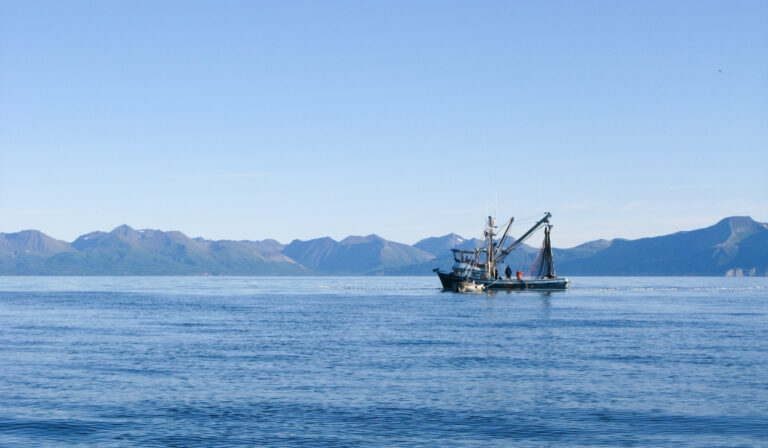
For years, the abundance, quality, and accessibility of Chinook has been recognized as the primary limiting factor to the recovery of the Southern Residents. Less has been said about the continuing authorization of unsustainable ocean-based fisheries that intercept and deprive the whales of the food they need to survive and support their young.
Recently, peer-reviewed science recognized reform of ocean-based fisheries as the most tangible means to immediately stabilize the SRKW population.
“Increased abundance and quality of prey within SRKW critical habitat can be realized by changing fishing practices,” said the authors. “Moving Pacific Salmon Treaty fisheries in Alaska and BC away from Chinook salmon rearing grounds and migration routes into terminal river and estuarine locations results in an immediate increase of Chinook in critical habitat of up to 25%”—more than enough to stabilize the orca population and provide a path forward to recovery.
As we celebrate this new birth and await the 2028 renegotiation of the Pacific Salmon Treaty, let there be no more denial. To save the Southern Residents and our wild salmon from extinction, all of us must rise together in a coastwide movement to demand urgent reforms to ocean-based fisheries that let salmon pass through SRKW critical habitats and return toward home rivers for recovery.
Given the compromised status and ecology of these keystone species, ocean-based salmon fisheries cannot be managed sustainably to accommodate SRKW and salmon recovery. After salmon hatch in their home rivers across the West Coast, the vast majority migrate to marine waters offshore of Southeast Alaska for foraging. Salmon of various species, populations, ages, and sexes comingle in this ocean nursery. Some populations remain abundant; many are the result of artificial production in hatcheries; others are teetering on the brink of extinction.
When fisheries managers enable industrial-scale ocean harvesting, we have no means of protecting endangered salmon that are mixed within fisheries. This makes it impossible to ensure that sufficient numbers of fish can migrate home from sea, pass through SRKW critical habitats, return to freshwater spawning grounds, and give rise to a new generation for recovery.
As taxpayers and communities invest billions to restore salmon habitats, individual wild salmon populations are blinking out of existence far from home in unsustainable fisheries. While wild salmon abundance and diversity declines from mixed-stock harvesting, so too does the age and size-structure of these populations. Since the 1920s, the average Chinook has shrunk by ~50%.
Ocean-based fisheries undermine salmon recovery, moreover, they directly starve the Southern Residents that are left with a fraction of the prey that they would otherwise have if our resource managers reformed harvesting. As recent science suggests, reforming ocean-based Pacific Salmon Treaty fisheries in Alaska and BC would immediately increase Chinook abundance for SRKW by 25%. Relative to other conservation actions, this is absolutely massive.
Given these findings, no solution is as tangible and significant as reforming ocean-based Chinook fisheries for SRKW recovery. No other alternative—habitat restoration, dam removal, or hatcheries—can immediately provide the starving whales with the prey they need at this critical moment of survival or extinction.
Understanding this, we must reform ocean-based Chinook harvesting under the Pacific Salmon Treaty and support a transition toward river-based salmon fisheries and sustainable fishing practices. The public must unite and take lead in demanding this common-sense solution, and then be prepared for pushback from industry and fisheries managers that will inevitably obfuscate the issue to preserve the status-quo. If we stand firm and stabilize SRKW through the only means available—ocean harvest reform—habitat restoration can eventually improve conditions for long-term recovery.
As the science suggests, hope for recovery remains. However, the longer we wait to act, the larger the social cost—and the greater risk that our recovery investments will fail orcas, wild salmon, and all future generations.